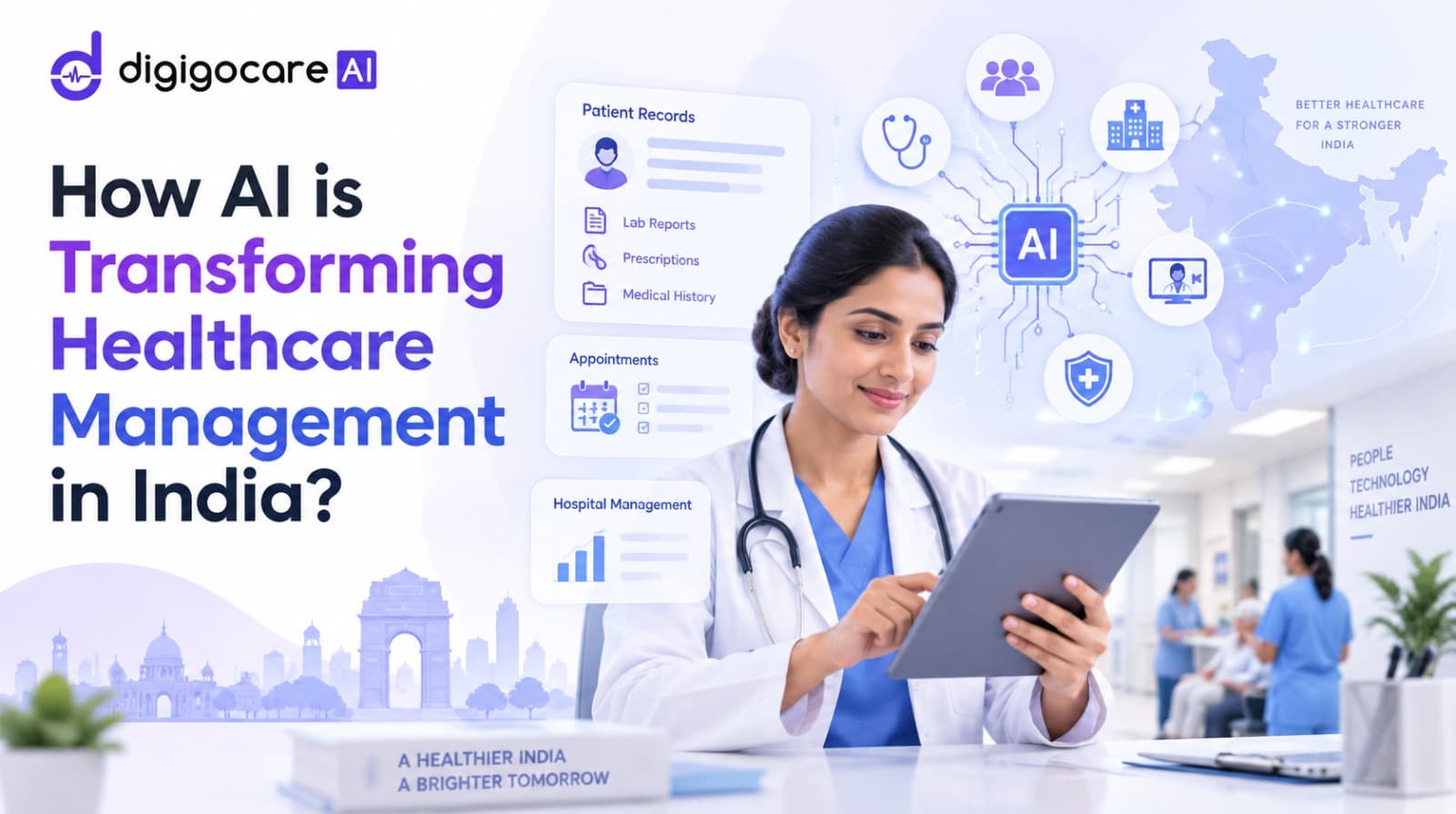
How AI is Transforming Healthcare Management in Bangalore?
Discover how AI is transforming healthcare management in Bangalore through smart clinic systems, patient management, automation and digital health platforms.
Introduction
Artificial Intelligence (AI) is transforming healthcare management by helping healthcare organizations manage patient information, schedule appointments, organize workflows and improve communication. AI is gradually becoming integrated with Bangalore's digital healthcare ecosystem, alongside electronic health records, diagnostics and patient care systems. AI has potential applications in diagnostics, surveillance, research and health service delivery.
What is AI in Healthcare Management?
AI in healthcare management refers to the use of artificial intelligence, machine learning and data-driven software applications to support healthcare administration and operations.
AI should not be viewed as a substitute for doctors and other healthcare professionals. Instead, it can help perform repetitive tasks, identify patterns and provide useful information for decision-making.
For example, an AI-enabled healthcare system can assist with appointment management, follow-ups, record keeping, reminders and information analysis.
How is AI Improving Patient Management in Bangalore?
AI can improve patient management by connecting different healthcare activities through digital workflows.
An AI-powered patient management system in Bangalore can help clinics schedule appointments, record patient details, send reminders and manage communication through a single platform.
This can reduce manual administrative work, improve patient communication and help clinics manage recurring activities.
Bangalore's digital healthcare ecosystem is also connected to broader efforts toward health information interoperability through the Ayushman Bharat Digital Mission (ABDM).
How Can AI Improve Clinic and Hospital Operations?
Healthcare organizations handle many daily activities, including appointment scheduling, patient registration, billing, documentation, staff coordination and follow-ups.
A smart clinic management system in Bangalore can use automation and AI to organize these activities. Clinics can automate reminders, maintain digital records, manage appointments and monitor operational data.
Hospital management software in Marathahalli and other areas can support larger healthcare organizations by bringing multiple functions into a connected digital system.
The main benefit is not simply adding AI to software. It is reducing repetitive tasks and making relevant information easier for authorized healthcare personnel to access.
How Does AI Support Faster Healthcare Decision-Making?
AI can process large amounts of information and identify patterns more quickly than many traditional manual methods.
In healthcare, AI can assist with pattern recognition, risk assessment, diagnostic support and clinical decision-making.
Examples of healthcare AI applications discussed in India include clinical decision support, diabetic retinopathy detection and AI-enabled medical devices.
However, AI-generated results should support professional medical judgment rather than replace it. Healthcare specialists must retain responsibility for clinical decisions.
How is AI Changing Digital Health Platforms in Bengaluru?
Bengaluru's technology ecosystem provides opportunities for innovation in healthcare technology.
An AI platform for healthcare management can connect patient management, digital record storage, appointments, communication and reporting.
For clinics modernizing their operations, AI-enabled platforms can help replace disconnected administrative processes with coordinated digital workflows.
The broader digital health ecosystem also emphasizes interoperability, secure data exchange and privacy. ABDM promotes consent-based health information exchange and privacy-by-design principles.
Can AI Help Healthcare Providers Communicate with Patients?
AI platforms can help healthcare providers manage routine patient communication, including appointment reminders, follow-ups and notifications.
For example, automated appointment reminders can reduce the number of routine messages staff need to send manually.
However, communications involving personal health information require appropriate privacy safeguards, patient consent and access controls. Responsible handling of sensitive information remains essential.
What Role Does AI Play in Healthcare Marketing?
AI is also influencing how healthcare organizations understand digital audiences and manage online communication.
A healthcare digital marketing agency in Bangalore may use data-driven technologies to analyze search behavior, content performance, patient inquiries and campaign results.
AI can help identify patterns that inform future content strategies. However, healthcare marketing must continue to prioritize accurate information and ethical communication.
Combining healthcare technology with an effective digital presence can make it easier for people to discover relevant clinic and hospital services online.
How Can AI Help Healthcare Organizations Improve Efficiency?
AI solutions can reduce repetitive manual work and help healthcare organizations organize information more effectively.
Potential applications include:
- Appointment scheduling
- Patient follow-up reminders
- Patient record keeping
- Workflow automation
- Data analytics and reporting
- Administrative task handling
- Patient communication
- Decision support
- Predictive analytics
- Healthcare documentation
Healthcare organizations should select the AI applications that address their operational needs rather than implementing every available feature.
What Should Healthcare Providers Consider Before Adopting AI?
Healthcare providers should evaluate more than the number of AI features offered by a software platform.
Important considerations include:
- Data privacy and security
- Integration with existing systems
- Ease of use for staff
- Interoperability
- Patient consent and governance
- Accuracy and human oversight
- Scalability
- Technical support
The ABDM framework emphasizes interoperability, security and privacy-by-design principles for participating digital health applications.
How Will AI Shape the Future of Healthcare Management in Bangalore?
AI is expected to play an increasingly important role in digital health records, diagnostics, telemedicine, patient management and healthcare administration.
AI, data science and health informatics are important areas in the development of future digital health infrastructure.
AI-enabled diagnostics and tools that assist healthcare workers are among the applications being explored in healthcare.
The future of AI in healthcare management will depend not only on technological capabilities but also on responsible implementation and appropriate human oversight.
What Are the Main Benefits of AI in Healthcare Management?
The main potential benefits of AI in healthcare management include automation, better organization of healthcare data, improved analytics, more efficient administration and better patient communication.
Organizations seeking AI-based clinic management software in Bangalore should prioritize platforms that solve their operational problems rather than choosing software simply because it includes AI features.
What is the Role of Healthcare Technology in Local Patient Acquisition?
Healthcare technology and digital marketing can work together to improve how patients discover and access healthcare services.
A healthcare digital marketing agency in Bangalore can help healthcare providers improve online visibility through SEO, content marketing, local search and digital advertising campaigns.
When these activities are supported by effective digital patient management, they can help create a smoother journey from online discovery to appointment scheduling and follow-up.
What Does the Future of AI-Enabled Healthcare Management Look Like?
The transformation of healthcare management through AI is part of a broader digital health ecosystem involving healthcare information, operational workflows, patient communication and decision-support systems.
Healthcare organizations adopting AI should focus on tangible operational benefits, data protection, interoperability and responsible use.
When implemented appropriately, AI can serve as a valuable technology layer for modern clinics and hospitals in Bangalore.
Conclusion
AI is transforming healthcare management by helping organizations manage information, automate routine tasks and coordinate healthcare activities.
From AI-powered patient management and smart clinic systems to digital health platforms and healthcare marketing technology, AI is becoming increasingly relevant to Bangalore's healthcare landscape.
However, healthcare organizations should not adopt AI simply to follow a trend. They should identify their actual challenges and select secure, scalable solutions that address their needs.
Frequently Asked Questions


Ready to grow your clinic or hospital?
Digitize and streamline operations with an all-in-one, AI-powered platform built for Indian healthcare.